
-
Wildfire damages and the cost-effective role of forest fuel treatments
“In this study, we integrated high-resolution data on wildfires, fuel treatments, suppression effort, and damages across the Western United States to assess their cost-effectiveness” Read HERE
-
Proof of Concept: Fuels Management Impacts on the Monroe Canyon Fire
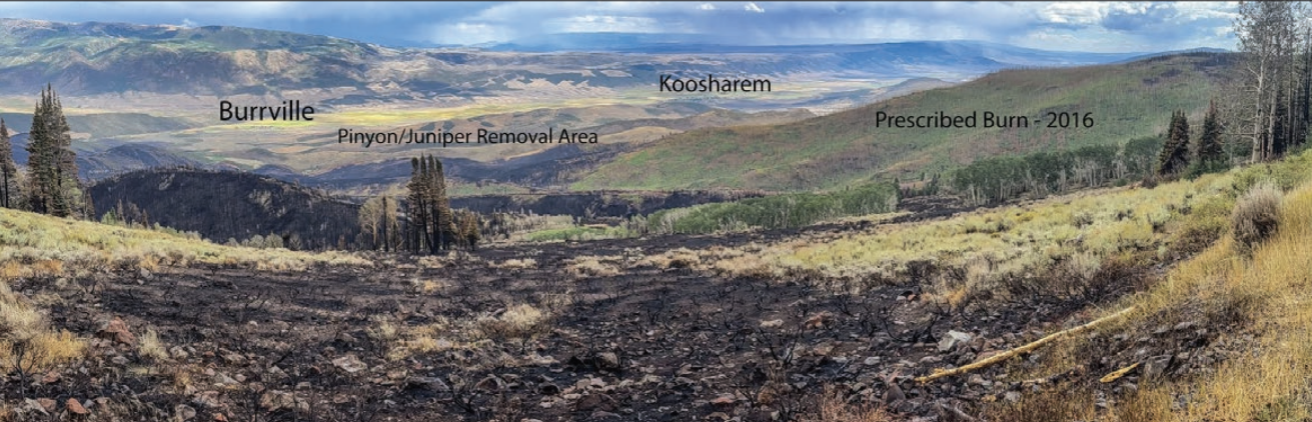
“Nearly two decades ago, Utah state officials and the Fishlake National Forest began one of the nation’s most progressive investments in fuels management to improve the ecological health of Central Utah’s forests and rangelands and lessenimpacts to communities from wildfire.” Read HERE
-
Collaborative Wildfire Governance within the Southwest Idaho Wildfire Crisis Strategy Landscape: Survey Results 2025
“This study examines collaborative wildfire governance networks within Southwest Idaho, a priority landscape designated in 2022 under the USDA Forest Service’s Wildfire Crisis Strategy (WCS). Through survey data from 64 respondents, the Fueling Adaptation study aimed to identify the structure, capacity, and gaps in governance networks addressing wildfire risk in Southwest Idaho and understand how…
-
Large Recreation Declines Persist for Years after Severe Wildfire but Not after Low-Severity or Prescribed Fire

“We analyze wildfire and prescribed fire sites (N = 185 and 54, respectively) across California and Colorado public lands, advancing a casual inference approach that leverages 11 million digital-mobility observations, from cell phones, social media, and citizen science apps, in a visitation model. This is the first landscape-scale causally-identified estimate of how fire type, severity,…
-
Fueling Adaptation: Collaborative Wildfire Governance in the Colorado Front Range Landscape
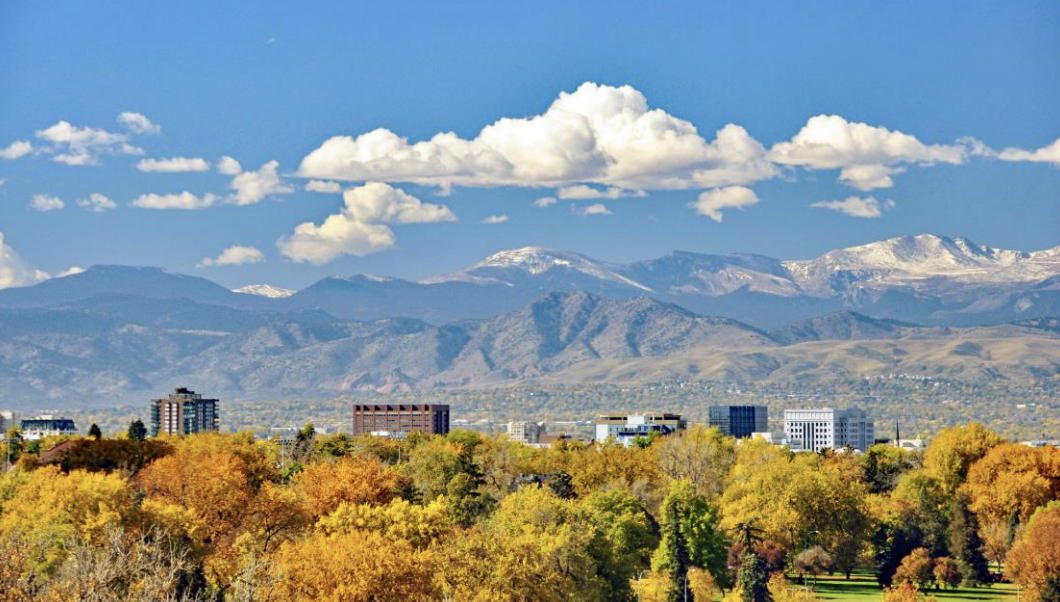
“Through survey data collected from 281 respondents revealing a collaborative network of 401 organizations, the study aimed to identify the structure, capacity, and gaps in governance networks addressing wildfire risk in the Colorado Front Range” Read HERE Muttaqee, M.; Evers, C.; Campbell, L.; Nielsen-Pincus, M.; Awbrey, O.; Hixson, K.; Johnson, M.; Svendsen. E., 2025. Fueling…
-
Assessing conservation planning in South Dakota: Challenges and opportunities in collaboration, public participation, and climate information

“This study describes conservation planning challenges in South Dakota, a predominantly rural state where over 80% of land is privately owned, and natural resources are highly valued” Read HERE Hulugh, Vivian; Redmore, Lauren; Zavaleta Cheek, Jennifer. 2026. Assessing conservation planning in South Dakota: Challenges and opportunities in collaboration, public participation, and climate information. Park Stewardship…
-
Research Brief: Piñon pine and juniper seedling regeneration persists at burned edges but remains limited two decades after large wildfires
A recent Fire Ecology study examines piñon-juniper woodland recovery decades after wildfire, finding that natural tree regeneration remains limited in large burned areas and identifying key factors that can support long-term forest restoration. Read the research brief here: Read the full paper here.
-
Wildfire risk to critical infrastructure: A systematic review highlighting the need for cross-sector collaboration
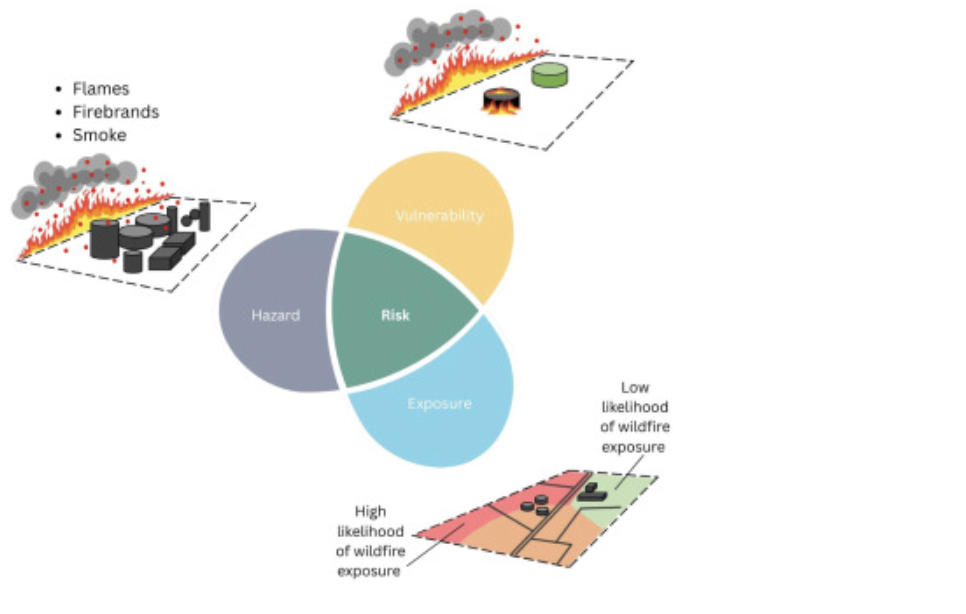
“In this systematic literature review, we analyse the types of infrastructure that have been examined and summarise the methodologies used to characterise wildfire hazard, exposure, and vulnerability across power, water, transport, and highly hazardous industrial infrastructure.” Read HERE
-
Science You Can Use in 5 minutes: Co-producing Science With Managers: Finding the right time-and-effort balance for those involved
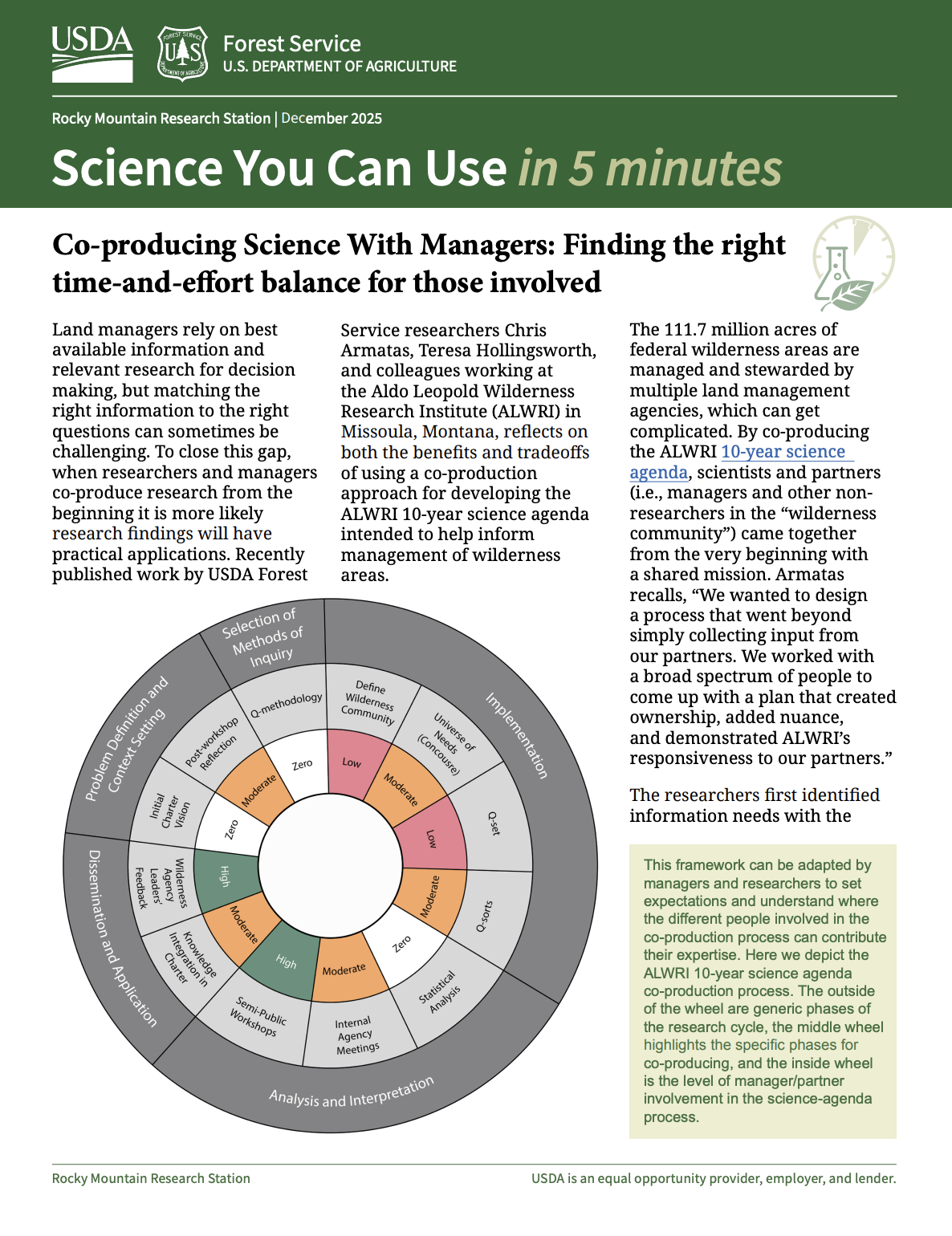
“Land managers rely on best available information and relevant research for decisionmaking, but matching the right information to the right questions can sometimes bechallenging. To close this gap, when researchers and managers co-produce research from the beginning it is more likely research findings will have practical applications” Read HERE
-
Burnt out on wildfire warnings: quality messages drive recreationists’ safety, but overload backfires

“We surveyed Southern California residents who recently recreated in the Los Padres, San Bernardino, Cleveland, and/or Angeles National Forests about the quantity, quality, and relevance of the fire messaging they received, and their affective, cognitive, and behavioral responses to that messaging.” Read HERE Budzyn, E. E., Zwickle, A., & Perry, E. E. (2026). Burnt out…
Categories
- Article/Book/Chapter
- Course/Curriculum
- Education & Training
- Highlights
- Maps, Models, and Apps
- Newsletter/Digest
- Pre and Post Emergency Resources
- Publication
- Research Brief/Synthesis
- Technical Report
- Uncategorized
- Video
- Video & Audio Resources
- Webinar
- Website
Archive
- August 2026
- July 2026
- May 2026
- April 2026
- March 2026
- February 2026
- January 2026
- December 2025
- November 2025
- October 2025
- September 2025
- August 2025
- July 2025
- May 2025
- April 2025
- March 2025
- February 2025
- January 2025
- November 2023
- October 2023
- September 2023
- May 2023
- April 2022
- March 2022
- February 2022
- January 2022
- October 2021
- August 2021
- July 2021
- May 2021
- March 2021
- February 2021
- January 2021
- December 2020
- November 2020
- October 2020
- September 2020
- August 2020
- July 2020
- June 2020
- May 2020
- April 2020
- March 2020
- July 2019
- July 2018
- June 2018
- October 2017
- September 2017
- June 2017
- April 2017
- March 2017
- November 2016
- October 2016
- August 2016
- May 2016
- April 2016
- November 2015
- October 2015
- September 2015
- June 2015