-
Right fuel treatment, right place: Managing wildfire in sagebrush country
“Sagebrush, the iconic gray-green shrub of the American West, occupies an area so vast it is often described as an ocean or sea. The Sagebrush Sea once stretched across nearly 175,000 square miles in western North America, but it has dwindled to nearly half that size since the arrival of European settlers in the 1800s.…
-
Hotter and drier fire seasons increase risk of severe wildfires in western US forests

Read HERE
-
State of Wildfires 2024–2025
“Climate change is increasing the frequency and intensity of extreme wildfires globally, yet our understanding of these high-impact events remains uneven and shaped by media attention and regional research biases. The State of Wildfires project systematically tracks global and regional fire activity of each annual fire season, analyses the causes of prominent extreme wildfire events,…
-
PRESCRIBED FIRE IN THE WEST: A SURVEY OF CURRENT STATE PRACTICES AND RECOMMENDATIONS TO INCREASE THE PACE AND SCALE OF PLANNED BURNS

Read HERE
-
Defend Your Core – An Invasive Annual Grasses Story
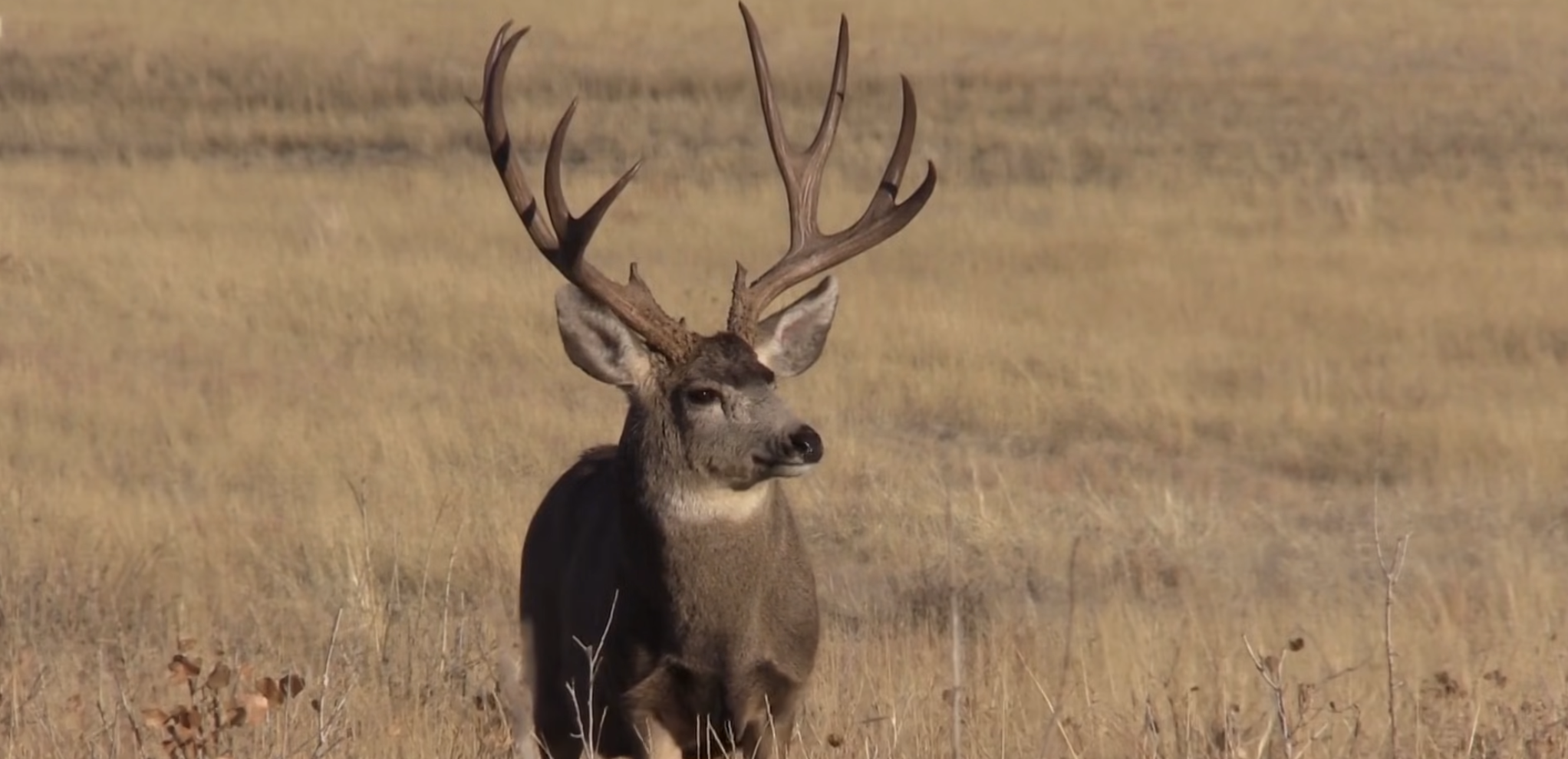
UWyo-led institute releases new film on managing invasive annual grasses. The University of Wyoming’s Institute for Managing Annual Grasses Invading Natural Ecosystems (IMAGINE) has released a new educational film for Western communities grappling with the spread of invasive annual grasses. Watch the film.
-
FUELING THE FLAMES: EXOTIC ANNUAL GRASSES TURNING UP THE HEAT
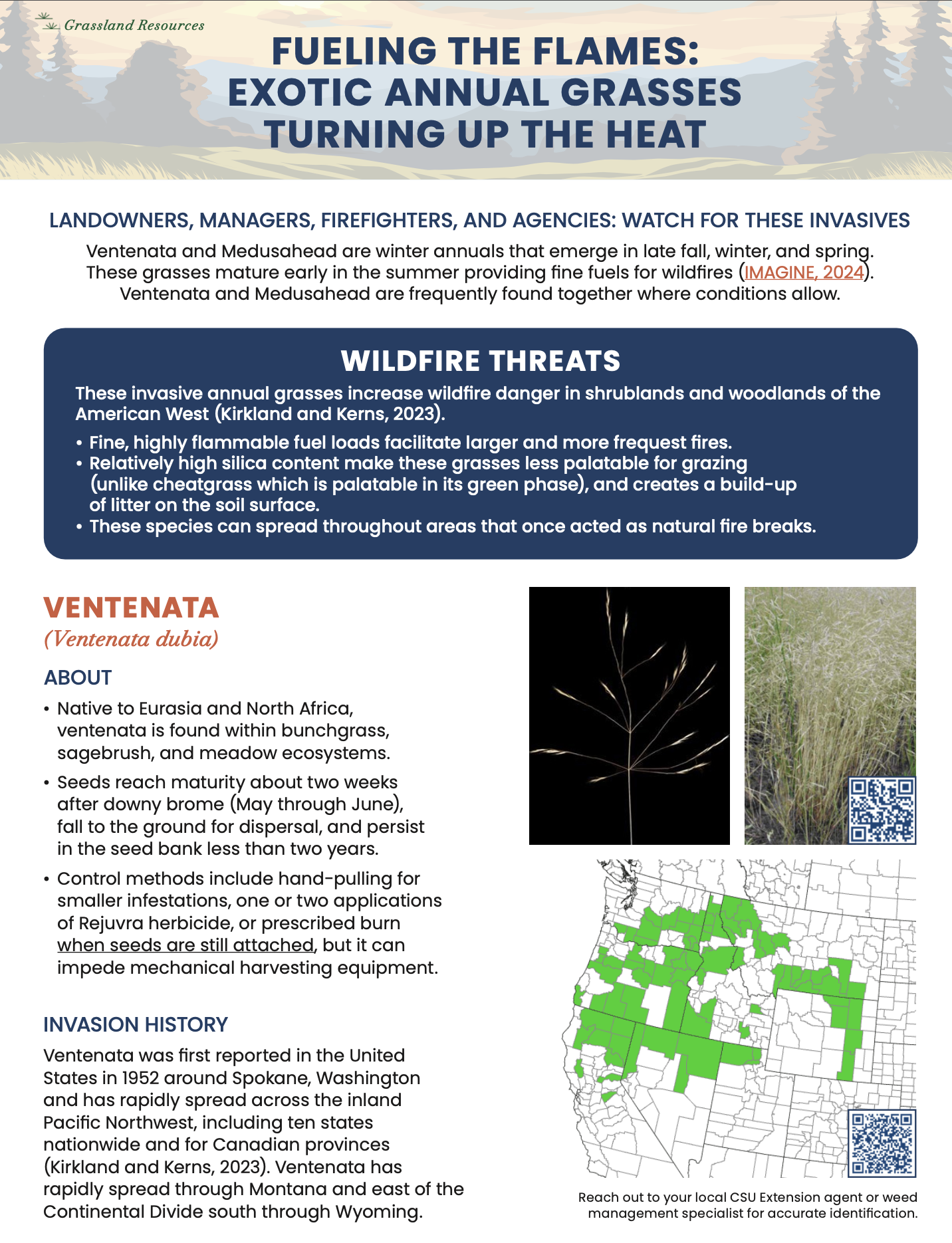
“LANDOWNERS, MANAGERS, FIREFIGHTERS, AND AGENCIES: WATCH FOR THESE INVASIVES”
-
Recovery Playbook
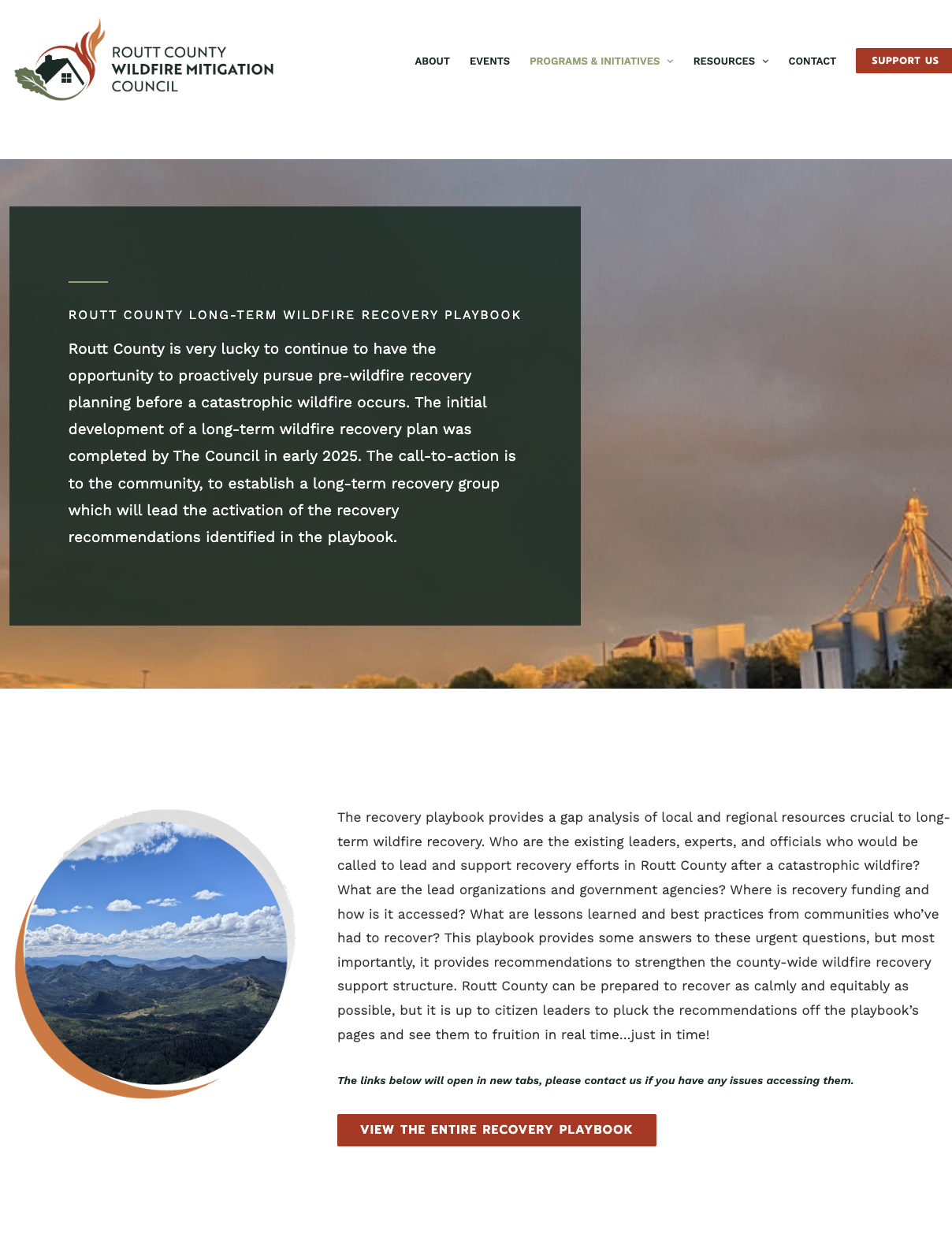
ROUTT COUNTY LONG-TERM WILDFIRE RECOVERY PLAYBOOK Read HERE
-
Firesheds and the Fireshed Registry
Firesheds are a way to delineate where fires ignite and are likely to, or not to, spread to communities and expose buildings. The fireshed registry is the geospatial portal that portrays the past, present, and future in terms of agency investments in forest and fuel management in relation to historical and predicted fire activity. The…
-
Hotter and drier fire seasons increase risk of severe wildfires in western US forests
“Wildfire activity has been increasing across western US forests, impacting public health, infrastructure, water quality, and the economy. While total annual area burned is often used to track wildfire trends, high-severity fire (fire that kills all or most trees) can have longer lasting impacts on forests and communities and may be a more meaningful measure.…
Categories
- Article/Book/Chapter
- Course/Curriculum
- Education & Training
- Highlights
- Maps, Models, and Apps
- Newsletter/Digest
- Pre and Post Emergency Resources
- Publication
- Research Brief/Synthesis
- Technical Report
- Uncategorized
- Video
- Video & Audio Resources
- Webinar
- Website
Archive
- August 2026
- July 2026
- May 2026
- April 2026
- March 2026
- February 2026
- January 2026
- December 2025
- November 2025
- October 2025
- September 2025
- August 2025
- July 2025
- May 2025
- April 2025
- March 2025
- February 2025
- January 2025
- November 2023
- October 2023
- September 2023
- May 2023
- April 2022
- March 2022
- February 2022
- January 2022
- October 2021
- August 2021
- July 2021
- May 2021
- March 2021
- February 2021
- January 2021
- December 2020
- November 2020
- October 2020
- September 2020
- August 2020
- July 2020
- June 2020
- May 2020
- April 2020
- March 2020
- July 2019
- July 2018
- June 2018
- October 2017
- September 2017
- June 2017
- April 2017
- March 2017
- November 2016
- October 2016
- August 2016
- May 2016
- April 2016
- November 2015
- October 2015
- September 2015
- June 2015