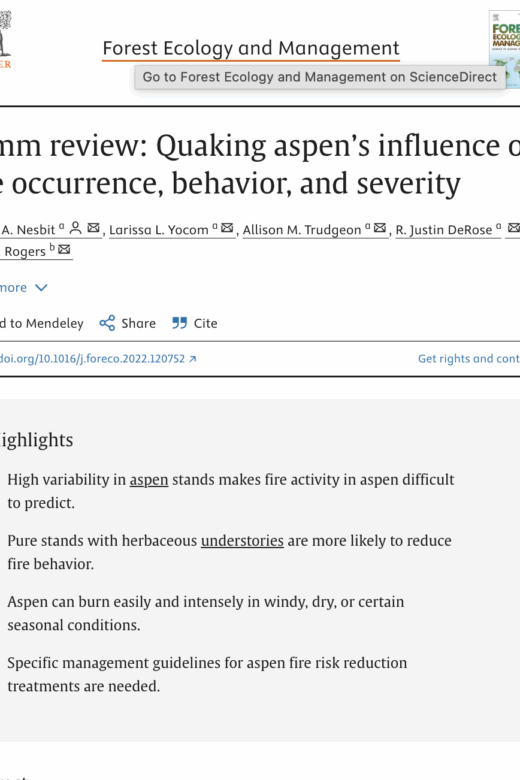
"Quaking aspen (Populus tremuloides Michx.) stands have historically been referred to as “firebreak” forest types that can reduce …
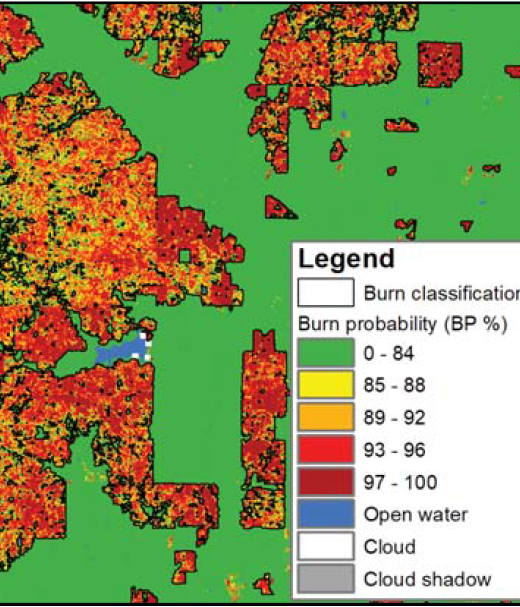
New Operational National Satellite Burned Area Product
New 1-pager from USGS, Great Plains Fire Science Exchange, and SRFSN: New Operational National Satellite Burned Area Product. Land …
Continue Reading about New Operational National Satellite Burned Area Product
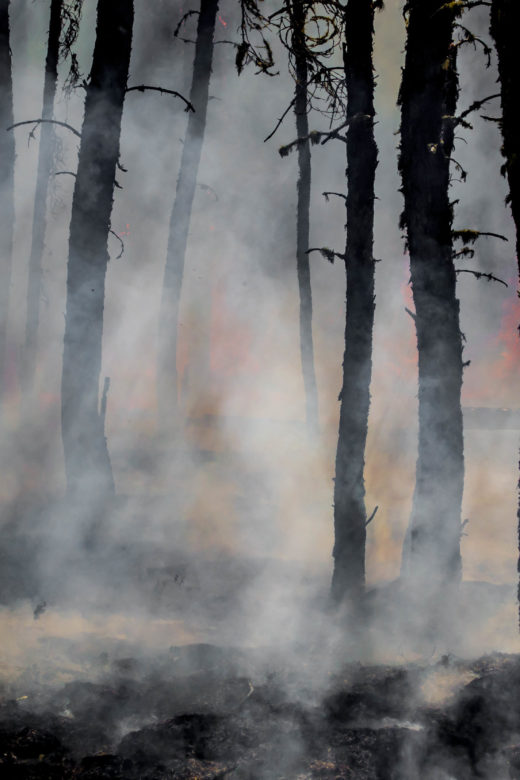
Reburn severity in managed and unmanaged vegetation in a large wildfire
Thompson, J.R., Spies, T.A., Ganio, L.M., 2007. Reburn severity in managed and unmanaged vegetation in a large wildfire. …
Continue Reading about Reburn severity in managed and unmanaged vegetation in a large wildfire
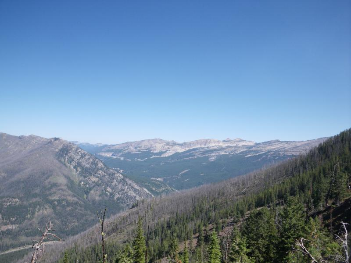
Wildland fire: Nature’s fuel treatment
From the Rocky Mountain Research Station:Every year wildland fires affect much more acreage in the United States compared to …
Continue Reading about Wildland fire: Nature’s fuel treatment
Fire Science Digest- Fire, Fuels, and Streams: The Effects and Effectiveness of Riparian Treatments
View the publication here!Fire is an important disturbance in riparian systems—consuming vegetation; increasing light; creating …
Fire Science Digest: Bark Beetles and Fire: Two Forces of Nature Transforming Western Forests
View the publication here!Bark beetles are chewing a wide swath through forests across North America. Over the past few years, …
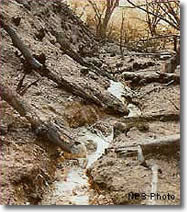
Wildland Fire in Ecosystems: Effects of Fire on Soil and Water
View the publication here!This state-of-knowledge review about the effects of fire on soils and water can assist land and fire …
Continue Reading about Wildland Fire in Ecosystems: Effects of Fire on Soil and Water